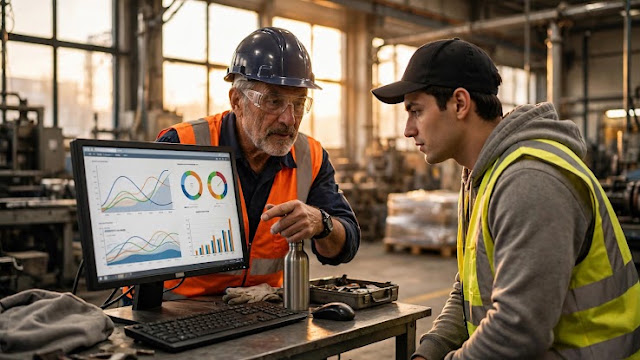
Manufacturing is no longer powered by machines alone. It is increasingly driven by knowledge workers—the people who apply expertise, judgment, and problem-solving to keep production moving, solve issues faster, and improve quality. In modern plants, these workers are not just managers or engineers; they include frontline supervisors, technicians, quality teams, and operators who must make smart decisions in real time.
As Peter Drucker famously pointed out, “The most important contribution management needs to make in the 21st century is similarly to increase the productivity of knowledge work and the knowledge worker.” That idea matters now more than ever because manufacturers are facing labor shortages, skills gaps, and increasing operational complexity.
The Problem Knowledge Workers Face
Knowledge workers often lose time searching for instructions, waiting for answers, relying on tribal knowledge, or switching between disconnected systems. In manufacturing, that creates very real costs: slower onboarding, more errors, inconsistent execution, safety risk, and lost productivity when experienced workers retire or move on.
The core problem is not a lack of effort. It is a lack of connected context—the right information, in the right place, at the right time. When knowledge stays trapped in people’s heads or scattered across emails, documents, and separate apps, organizations struggle to scale expertise reliably.
What Plex Connected Worker Covers
Plex Connected Worker is designed to bring people, data, and work together inside the manufacturing flow. It provides step-by-step digital work instructions, activity tracking, performance metrics, and embedded collaboration so workers can do their jobs with more clarity and fewer interruptions.
The solution also covers skills and knowledge management, helping companies track competency, standardize training, and preserve institutional knowledge. It supports employee health and safety by creating a single source of truth for work instructions and training, while also enabling real-time communication and better coordination on the plant floor.
Closing Section
The future of manufacturing belongs to organizations that treat knowledge as a production asset. Plex Connected Worker helps turn tribal knowledge into repeatable digital workflows, enabling faster execution, stronger collaboration, and better decisions at the point of work.
In a world where skill shortages and operational complexity are only increasing, solutions like Plex are no longer optional—they are becoming essential infrastructure for competitive manufacturing.